How Office Air Damages Your Skin: AC, Screens & Protection Tips
This guide shows how to protect your indoor skin so it stays comfortable, calm, and glowing all week.
Why “Indoor Skin” Still Needs Protection
Most people assume skin damage happens only outside in direct sun, pollution, and heat. But if you spend most of your day in an office, car, or at home in front of a laptop, your skin faces a different type of daily stress.
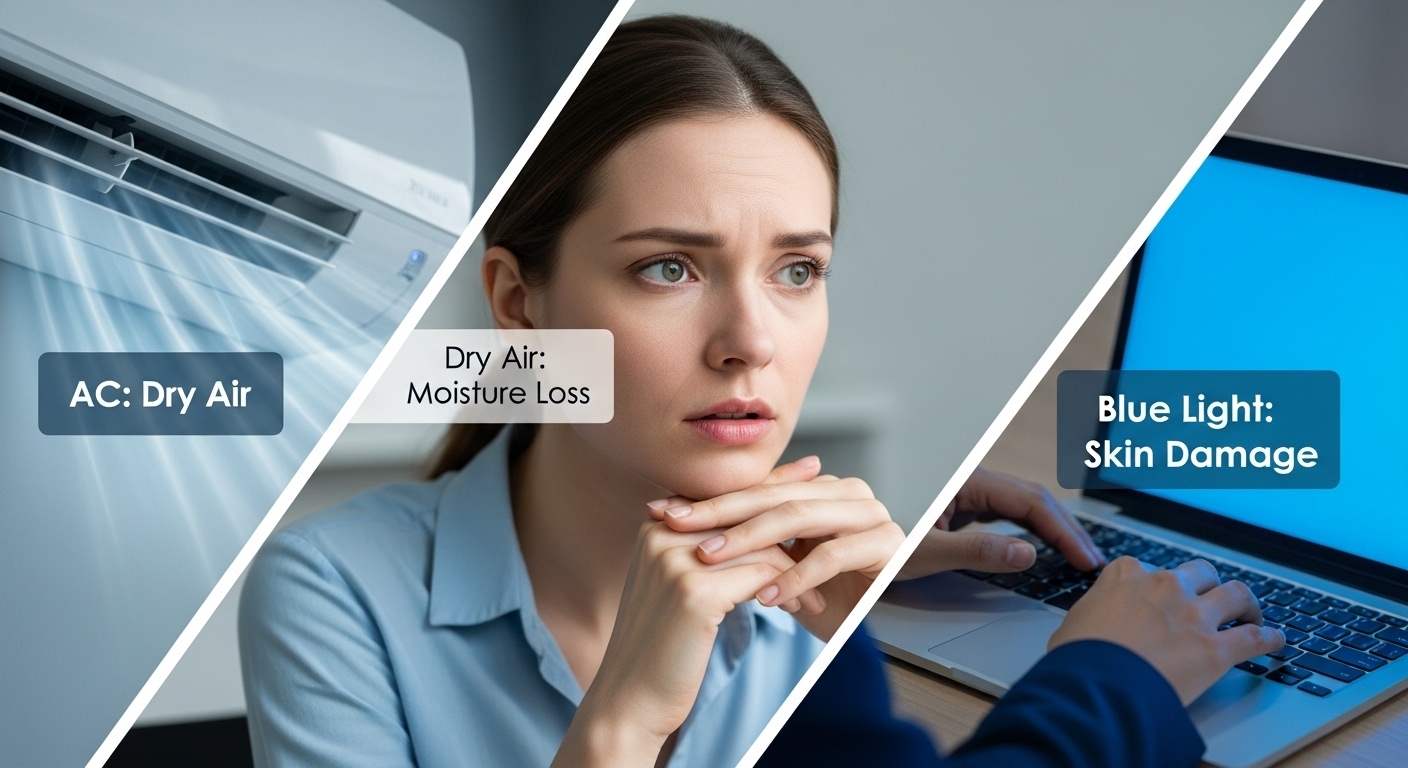
Air conditioning and heating strip moisture from the air and from your skin. Screens and indoor light can contribute to pigmentation and oxidative stress. Sitting for long hours in the same environment can worsen dryness, oil imbalance, and irritation.
The goal isn’t to fear your office. It’s to quietly adjust your routine so your skin stays balanced despite that environment.
How Office Environments Affect Your Skin
Office air is often dry. AC and heating lower humidity, so water evaporates more quickly from your skin. The air gets recycled, meaning dust, tiny particles, and indoor pollutants circulate all day. Long periods in the same position mean sweat, oil, and product can sit on the skin for hours.
What this can lead to:
Tightness and flaking, especially around the mouth, cheeks, and hands. Dull, “grey” or tired looking skin by the afternoon. Increased sensitivity, redness, or stinging when you apply products. More clogged pores and breakouts, especially if you also wear makeup or masks.
Screens, Blue Light, and Your Skin
Blue light (HEV light) comes from phones, laptops, and monitors. Research is still evolving, but there is growing concern that it may contribute to oxidative stress (a type of “rusting” effect on cells). It may worsen pigmentation and melasma, especially in medium to deeper skin tones. It keeps you awake late into the night, which indirectly affects your skin via poor sleep.
Practical ways to protect your skin from screen time:
Use a broad spectrum sunscreen daily, even indoors, especially if you sit near windows. Add antioxidants (like vitamin C, niacinamide, or green tea) in your morning routine. Use dark mode and reduce screen brightness when possible, and set digital curfew times to protect your sleep.
AC, Low Humidity, and Your Skin Barrier
Your skin barrier is the outer layer that keeps moisture in and irritants out. AC and heating challenge that barrier by pulling water from the top layers of your skin. This makes fine lines and texture more visible and increases the chance of sensitivity and conditions like eczema or rosacea flares.
Signs your barrier is struggling in office air:
Your face feels tight or itchy a few hours into the workday. Products that never used to sting now burn or tingle. Makeup cracks, clings to dry patches, or looks patchy by the afternoon.
If you notice these, your skin needs more hydration and barrier repair, not more peels or scrubs.
Morning Routine for “Indoor Days”
You don’t need a 10 step routine. A simple, smart morning routine is enough to prepare your skin for office life.
1. Gentle Cleanse (or Just Rinse)
Use a mild, low foam, non-stripping cleanser if you’re oily or wore heavy products overnight. If you have very dry or sensitive skin, you may only need a lukewarm water rinse in the morning.
2. Antioxidant Layer
For most skin types, a vitamin C or niacinamide serum can help defend against pollution, blue light, and dullness. For sensitive or redness prone skin, choose calmer antioxidants like green tea, resveratrol, or centella.
3. Moisturizer Matched to Your Skin Type
Oily or combination skin needs lightweight gel or lotion, non-comedogenic formulas. Normal skin does well with lotion or light cream. Dry skin needs richer cream with ceramides, squalane, or shea butter.
4. Sunscreen, Even Indoors
Use broad spectrum SPF 30 or higher. Reapply if you sit next to a window or go in and out frequently. Look for formulas that suit your skin type (gel for oily, cream for dry) so you’ll actually use them every day.
Desk Side Habits to Protect Indoor Skin
Small habits at your desk can make a big difference over an 8 to 10 hour day.
Drink water regularly. Keep a bottle at your desk and sip throughout the day, not just with meals. Care for your lips and hands since AC dries these fastest. Keep a simple lip balm and hand cream nearby.
Use hydrating support wisely. A light hydrating mist or spray can help, but in very dry rooms it’s better to apply mist and then seal with a thin layer of moisturizer.
Avoid constantly washing your face at work. If you’re oily, use blotting papers or a clean tissue on the T-zone. Over washing strips your barrier and can make oil production worse.
Evening Routine to Undo Office Stress
Nighttime is when you reset your skin and repair what the day took away.
1. Proper Cleanse
If you wear SPF and makeup, use a double cleanse: oil or balm first, then a gentle water based cleanser. If you don’t wear makeup, one gentle cleanse is enough.
2. Targeted Active (a Few Nights Per Week)
Choose one main active depending on your concern. For fine lines or texture, try a retinoid or retinol (start slowly, 1 to 2 nights per week). For pigmentation or red marks, use azelaic acid, niacinamide, or a gentle exfoliating acid used sparingly. For acne prone skin, consider a retinoid, salicylic acid (BHA), or azelaic acid.
Avoid layering too many strong actives on the same night, especially if you already feel dry from AC.
3. Barrier Focused Moisturizer
Look for ceramides, cholesterol, fatty acids, panthenol, beta glucan, or squalane. If your skin feels very tight, you can apply an extra thin layer over the driest areas.
Office Skincare Tips by Skin Type
Oily or Acne Prone Skin
Choose lightweight, non-comedogenic moisturizers and SPF. Use blotting papers instead of harsh toners or repeated washing. Avoid heavy, occlusive foundations all week. Consider lighter coverage or concealer where needed.
Dry or Sensitive Skin
Opt for creamier cleansers (milk or balm textures). Use a richer moisturizer under your SPF and again at night. Avoid fragranced mists, astringent toners, and frequent acid use.
Combination Skin
Use a gel moisturizer on your T-zone and a slightly richer texture on your cheeks. Spot treat by applying actives (like exfoliating acids) only where you need them, not all over the face. Pay attention to how your skin feels mid-day. Adjust hydration according to your driest zone.
Environmental Tweaks at Work and at Home
Where you can control your environment, use it to help your skin.
Keep a small desktop humidifier at work if allowed, or use one at home while you sleep. Try not to sit directly under or in front of a vent blowing on your face.
Clean “skin contact” items regularly. Your phone screen, headphones, glasses, and pillowcases can all transfer oil, sweat, and bacteria. These small adjustments support your skincare products instead of working against them.
Common Mistakes People with Indoor Jobs Make
Skipping sunscreen because they’re “inside all day.” Over cleansing or scrubbing the face due to shine or clogged pores. Relying on thick, heavy makeup to hide dryness and fatigue instead of fixing the underlying dehydration. Trying too many new actives at once when their barrier is already stressed by dry office air.
A better approach is: simplify, hydrate, protect, and repair.
When to See a Dermatologist
Even with a careful routine, you should consider a professional visit if you have persistent redness, burning, or flaking that doesn’t improve with gentle products. Pigmentation or melasma can worsen even when you spend most of your time indoors, and this needs expert evaluation.
You might also experience frequent breakouts along the jawline, cheeks, or forehead that don’t respond to over the counter care. Or your skin suddenly becomes reactive to products you’ve used for months without issues.
If you’re dealing with persistent skin concerns from your indoor environment, consulting the best dermatologist in Islamabad can help you identify underlying conditions and get a treatment plan tailored to your specific needs. Professional guidance is especially valuable when your skin barrier is compromised from constant AC exposure or when you need advanced solutions beyond your daily routine.
For those considering professional treatments to address stubborn concerns like pigmentation or unwanted hair growth that worsens with indoor stress, options like laser hair removal in Islamabad are available through qualified practitioners who understand how indoor environments affect your skin’s condition and recovery.
A dermatologist can check for underlying conditions, tailor actives to your skin and environment, and if needed, suggest in clinic treatments that support your barrier instead of just masking issues.
Remember, protecting your indoor skin isn’t about adding complexity to your life. It’s about making small, smart adjustments that help your skin thrive in the environment where you spend most of your time.